The Open-Plan Dream Has a Very Muddy Weak Spot
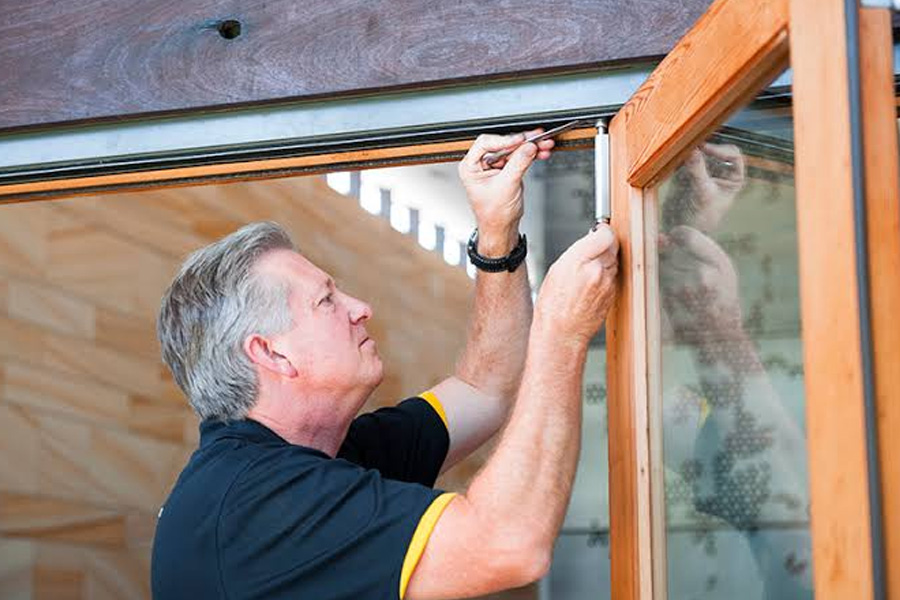
Image Source: www.lockandroll.com.au
For years, the dream was obvious.
Knock through the back of the house. Build a big kitchen extension. Add as much glass as possible and install doors that open the whole room onto the garden.
Then add children, a dog and a Yorkshire winter.
Suddenly that beautiful architectural threshold is full of mud, grit, leaves, dog hair and whatever else has been dragged across the patio.
This is the less photogenic side of open-plan living. Bifold and sliding doors have become some of the hardest-working moving parts in modern homes, yet their tracks sit precisely where garden debris naturally collects.
It is also why many bifold door repairs start with something remarkably ordinary: dirt.
Not catastrophic mechanical failure. Not defective glass. Not some obscure manufacturing problem.
Just years of tiny particles getting into places they shouldn’t.
The back door isn’t really the back door anymore
Think about how many homes worked twenty years ago.
There was often a kitchen door leading outside. Perhaps a separate set of French doors in the dining room. The garden entrance was relatively narrow and didn’t necessarily get used constantly.
Modern extensions changed that.
Now the main kitchen can run directly into the garden through four, five or six metres of glass. Once those doors are open, the boundary between indoors and outdoors almost disappears.
That’s the point.
But it also means the sophisticated door system becomes a thoroughfare.
Children run through it.
Dogs run through it.
People carry garden furniture through it.
Barbecues come out.
Bikes occasionally come in.
Plant pots get moved.
Then somebody stands on the track with muddy trainers while trying to shut everything at the end of the evening.
None of this is particularly unreasonable use.
It is exactly how these spaces were designed to be enjoyed.
The problem is that precision running gear and garden debris are terrible companions.
Grit is much nastier than it looks
A tiny stone doesn’t look threatening.
Put it between a heavily loaded roller and a metal running surface, however, and the situation changes.
Large glazed doors are heavy. Very heavy in some cases.
That weight needs to travel smoothly through relatively small mechanical components. Once hard debris gets trapped underneath, the forces involved can damage rollers or mark running surfaces surprisingly quickly.
The same applies to sand and dried soil.
Fine particles work their way into moving components where they become abrasive. One opening cycle does very little. Hundreds or thousands are another matter.
This is why a neglected track can develop obvious wear patterns.
Scratches.
Rough areas.
Tiny indentations.
Compacted material pushed into corners.
By the time the homeowner notices that the door feels different, the contamination may have been there for months.
Dogs deserve their own section
Anyone with a dog and garden-facing doors will understand this.
A wet dog does not stop politely at the threshold and wipe its feet.
It charges inside.
Mud, water, grass and whatever mysterious material it found at the bottom of the garden comes with it.
Sliding patio doors are particularly vulnerable because their lower tracks naturally collect material. Some systems have channels and drainage arrangements that are fairly easy to keep clear. Others have awkward recesses where dirt seems almost designed to hide.
Pet hair gets everywhere too.
Mixed with moisture and ordinary garden dirt, it can create surprisingly dense material around the edges of tracks.
Then it dries.
Then it gets wet again.
Repeat that for several winters.
People often assume a patio door has become difficult to move because the rollers have simply worn out with age. Sometimes they have. But on inspection, there can be years of contamination contributing to the problem.
The door has effectively been running through dirt for a significant chunk of its life.
The kitchen extension made doors busier
This is an interesting consequence of changing home design.
Doors aren’t necessarily getting worse.
We’re using them much harder.
A large sliding door in an older property might once have been opened occasionally during warm summer afternoons.
A similar door in a modern family extension could operate dozens of times during a busy day.
Someone lets the dog out.
Someone lets it back in.
A child goes outside.
Another child follows.
Someone takes washing out.
The dog goes out again.
Then comes the barbecue.
By evening, the system has experienced more opening cycles than an older patio door might have seen during an entire week.
Do that for ten years and the numbers become significant.
This matters because people often compare the lifespan of modern doors with much older installations without comparing how those doors were actually used.
The battered old slider at your grandparents’ house may have survived since 1998.
It might also have been opened twice a week.
Mud is only half the problem
Water causes its own issues.
Most external door systems are designed to deal with rain, obviously. But drainage channels still need somewhere for that water to go.
Once channels become blocked with dirt, leaves or moss, moisture can remain around the lower sections of the door far longer than intended.
That’s when things become less pleasant.
Metal components spend extended periods damp.
Contamination remains wet.
In colder weather, condensation adds further moisture.
A lot of homeowners never inspect drainage points because there is no obvious reason to do so. The door still works. The glass looks clean. Everything visible from standing height appears normal.
Meanwhile the bottom track resembles a miniature compost heap.
It happens more than you’d think.
Cleaning the glass isn’t maintaining the door
This distinction gets missed.
People maintain the appearance of doors extremely well.
Glass cleaner comes out regularly. Frames get wiped. Fingerprints disappear. Everything looks immaculate from the kitchen.
Mechanically, the same system can be filthy.
The running gear is what actually carries the weight and allows the door to function, yet it gets a fraction of the attention given to the glass.
It is a bit like washing a car religiously while never checking the tyres.
Looks lovely.
Eventually there’s a problem.
The good news is that sensible track cleaning isn’t particularly complicated. Removing loose debris before it becomes embedded is far better than waiting until the rollers have repeatedly travelled across it.
Vacuuming loose grit can help.
A soft brush can reach awkward areas.
Drainage points should remain unobstructed.
Nothing revolutionary.
The important part is avoiding the temptation to turn maintenance into amateur engineering.
Cleaning accessible dirt is one thing.
Taking adjustment mechanisms apart because the door still feels stiff afterwards is something else entirely.
Then somebody reaches for the spray can
Almost inevitably.
A sliding door feels heavy, so lubricant gets sprayed into the track.
The door might even feel better temporarily.
Unfortunately, adding lubricant to a dirty running surface can create a sticky mixture that attracts even more contamination.
Now instead of loose dust that could have been vacuumed away, you’ve got oily dirt clinging to everything.
Different components require different treatment too. What is suitable for one part of a door system isn’t automatically suitable for another.
If a roller is mechanically damaged, no amount of spraying will restore its shape.
If the panel has dropped, lubrication doesn’t alter the alignment.
And if the running surface itself has been damaged by years of grit, making it slippery isn’t repairing it.
This is where patio door repair work can become more involved than homeowners expect. The obvious symptom might be a heavy door, but the actual cause could involve rollers, track condition, alignment or a combination of all three.
You can hear trouble developing
Doors often tell you they’re unhappy before they actually stop working.
Listen.
A healthy sliding system shouldn’t sound like somebody dragging a toolbox across concrete.
Grinding is a warning.
Crunching definitely is.
Intermittent clicking from the bottom of a heavy sliding panel deserves investigation too.
Bifold systems can make slightly different noises depending on their hardware, but a sudden change is usually worth noticing.
The difficulty is that people adapt.
A door becomes marginally noisier over several years and the household gradually accepts the new normal.
Visitors sometimes notice before the owner does.
“Has that door always been that heavy?”
Yes, apparently.
Except it probably wasn’t.
Autumn is particularly rough on tracks
Summer gets most of the attention because that’s when large garden doors are used heavily.
Autumn can be worse mechanically.
Leaves appear.
Rain becomes more frequent.
Gardens become muddier.
People continue walking through the same opening, carrying wet debris directly towards the running system.
Then temperatures fall and doors remain closed for longer periods, trapping moisture and dirt that would have dried quickly during summer.
By winter, the track can be in a completely different condition from August.
This is one reason small problems suddenly seem to emerge during colder months.
The weather hasn’t necessarily broken the door.
It has changed the conditions around an existing problem.
The threshold itself gets abused
There is another aspect nobody thinks about during the glossy extension design stage.
People stand on tracks.
They shouldn’t ideally, but they do.
A wide opening feels like part of the floor when the bifolds are fully folded away. Children step directly across it. Furniture gets carried over it. Heavy plant pots sometimes get dragged across it.
Low thresholds are particularly good at creating that seamless indoor-outdoor appearance.
They are also very easy to forget about.
Damage doesn’t always happen dramatically. Repeated knocks and contamination can gradually affect how the system operates.
This is especially relevant where patios sit close to the internal floor level.
Beautiful design.
Very practical for walking outside.
Also extremely convenient for dirt.
Not every stiff door needs new rollers
This is worth saying because roller replacement gets suggested very quickly with sliding doors.
Sometimes the rollers are absolutely the problem.
Sometimes they’re only part of it.
A door can become difficult to move because the track is damaged. It might have dropped out of alignment. The frame itself could have shifted fractionally. Dirt could be preventing the running gear from operating correctly.
There may be several issues together.
Simply installing new rollers onto a damaged or badly contaminated running surface doesn’t address everything underneath.
Diagnosis first.
Parts second.
The same logic applies to locks. A locking mechanism can feel stiff because the door is no longer sitting correctly in the opening. Replacing the mechanism without correcting the alignment just asks the new part to fight the same problem.
That doesn’t usually end brilliantly.
Open-plan living isn’t going anywhere
Despite all this, very few people are about to start bricking up their extensions.
Nor should they.
Large glazed openings genuinely changed British home design for the better in many respects. Kitchens are brighter. Gardens feel more connected to living spaces. Houses that once had dark rear rooms can feel completely different.
The issue isn’t the concept.
It’s the assumption that sophisticated moving doors can be treated like pieces of wall.
They can’t.
The larger and heavier the system, the more worthwhile basic maintenance becomes.
A five-metre opening with several glazed panels contains substantial mechanical hardware doing real work every time somebody opens it.
It needs a little attention occasionally.
Small children create a different kind of wear
Children don’t operate doors with mechanical sympathy.
Nor should anyone expect them to.
They pull handles halfway while moving the door. They push panels from odd positions. They occasionally try to close things with toys sitting in the track.
Normal family life.
But it does mean a heavily used family bifold system experiences different stresses from one in a quiet household.
The important thing is spotting when something has changed.
If a child suddenly can’t open a door they previously moved easily, that might tell you more than you’d expect.
The door may be getting heavier.
If everybody starts using a different panel because one has become awkward, that’s another clue.
Households naturally develop workarounds without consciously acknowledging them.
“We don’t use that side.”
Why?
“Because it sticks.”
There you go.
A stiff door can eventually affect the lock
This is where apparently unrelated problems start joining together.
Running resistance causes people to apply more force.
Poor alignment means locking points no longer meet their keeps cleanly.
The handle then requires extra pressure.
Eventually internal locking components are carrying loads they weren’t designed to handle repeatedly.
A door that started out with contaminated running gear can therefore end up needing UPVC mechanism repairs later if the underlying problem is ignored for long enough.
This is what makes early symptoms worth paying attention to.
Not because every noisy roller represents an emergency.
It doesn’t.
But mechanical problems tend to spread when force is used to compensate for them.
The simplest habit is probably the best one
Look down occasionally.
That’s really it.
People naturally look through their garden doors rather than at the machinery underneath them.
Every few weeks during periods of heavy use, check the track.
Remove obvious grit before the rollers find it.
Clear leaves.
Don’t allow mud to accumulate in corners.
Pay attention to drainage areas.
And if the doors suddenly feel significantly heavier despite the track being clean, don’t assume adding more force is a maintenance technique.
It isn’t.
The funny thing about the modern open-plan extension is that homeowners can spend tens of thousands of pounds creating an enormous architectural connection between house and garden, only for one of its biggest mechanical enemies to be a three-millimetre piece of gravel brought in on somebody’s trainer.
Not particularly glamorous.
Very British, though.