Innovative Cold Storage Construction Tailored for Chinas Food Market Needs
You know that moment when you open your fridge and see a bag of spinach that’s somehow turned into a science experiment overnight? Now scale that frustration up to a warehouse full of dragon fruit, bok choy, and lychee destined for millions of hungry customers. That’s the daily reality for China’s food supply chain, and it’s why a reliable China cold storage solution provider has become the unsung hero of the nation’s dinner tables. The trick isn’t just building a big freezer—it’s about crafting a space that breathes, adjusts, and respects the delicate personality of every tomato and scallion. As an editor covering this space, I’ve seen warehouses that feel more like high-tech greenhouses than cold boxes, and it’s changing everything we thought we knew about keeping food fresh.
The Shift from Warehouses to Freshness Ecosystems
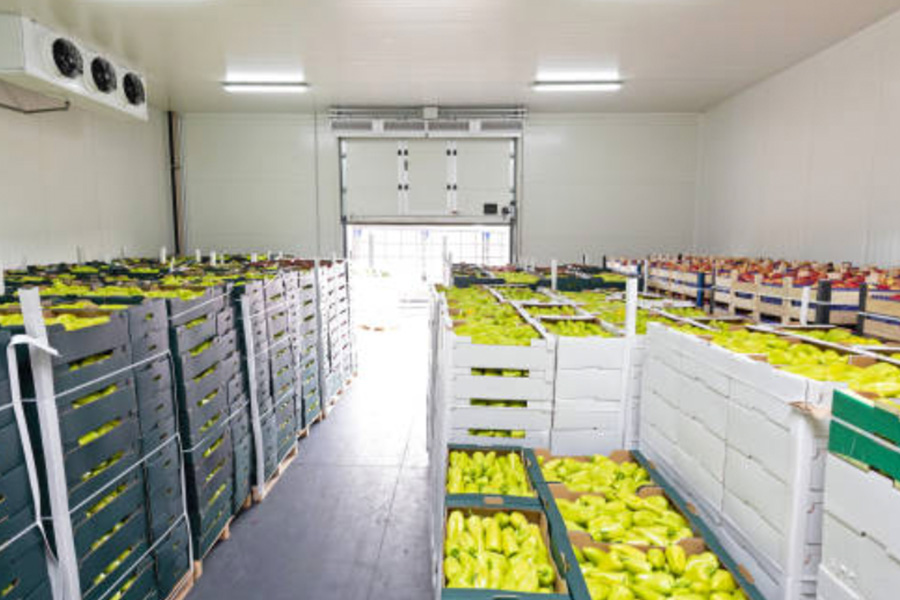
Let’s be honest: old-school cold storage was basically a concrete tomb for food. You threw in crates, cranked the temperature to arctic levels, and prayed nothing turned to mush. But China’s food market, with its relentless demand for seasonal produce and exotic imports, demands more. A top-tier China cold storage solution provider now designs facilities that mirror a farmer’s market in climate control—zones for ethylene-sensitive apples, humidified chambers for leafy greens, and rapid-chill tunnels that lock in orchard-fresh sweetness. I visited a facility near Guangzhou last year where the manager proudly showed me a “banana ripening room” that adjusts humidity by the hour. It felt like watching a chef tune a recipe, not a logistics hub. This shift from brute force to delicate ecosystems is what separates a good builder from a game-changer in the market.
When you talk about produce, you’re talking about living things. A strawberry doesn’t stop metabolizing the second it’s picked—it’s just breathing slower. That’s where a specialized Fruits and Vegetables Cold Storage Construction Solution comes in. These aren’t one-size-fits-all designs, they’re tailored symphonies of airflow, insulation, and smart sensors. Take the humble pear: it’s sensitive to ethylene gas from nearby apples, so a smart layout separates them with dedicated airlocks. I read a report from a Jiangsu-based builder who installed variable-speed fans that mimic natural wind patterns, reducing shrivel and keeping Asian pears crisp for months. It’s this kind of obsessive detail that makes a cold storage solution not just a building, but a living partner in the food chain.
Why Air Quality Beats Ice Cubes Every Time
Here’s a fun fact that blew my mind: most produce doesn’t actually need to be frozen solid to stay fresh. It needs a specific mix of oxygen, carbon dioxide, and humidity—what engineers call controlled atmosphere storage. A forward-thinking China cold storage solution provider understands that throwing ice blocks at the problem is primitive. Instead, they install nitrogen generators to displace oxygen, slowing down the ripening of peaches and plums without turning them into icy rocks. I talked to one project manager in Shandong who told me their strawberry chamber runs at 0.5°C with 90% humidity, and the berries last three weeks without mold. That’s not storage—that’s time travel for fruit.
And don’t get me started on the aesthetics. A modern cold storage facility shouldn’t feel like an industrial dungeon. One Fruits and Vegetables Cold Storage Construction Solution I documented in Shaanxi used translucent panels that let in soft natural light during the day, combined with UV-filtered LED strips at night. The workers loved it, but more importantly, the produce seemed to respond—less stress, less weight loss. It sounds a bit woo-woo, but there’s real science behind it: certain wavelengths of light can actually boost antioxidant levels in leafy greens post-harvest. So when a solution provider starts talking about “biophilic design,” they’re not just selling fancy walls, they’re engineering a longer shelf life.
The Real Cost of Cutting Corners (Spoiler: It’s Not Just Money)
I’ve seen the alternative, and it’s heartbreaking. A small operator in Yunnan tried to save on insulation by using standard foam panels instead of polyurethane with vapor barriers. Within six months, moisture plagued the structures, causing ice buildup that damaged their precious tea leaves and mushrooms. They ended up losing more inventory value than the entire construction cost. A reputable China cold storage solution provider will always argue that the upfront investment in high-quality door seals, flooring with thermal breaks, and backup generators pays for itself within the first season. One veteran designer told me, “A cold room is like a thermos—if the cap leaks, the coffee gets cold. Except here, the ‘coffee’ is a thousand boxes of expensive persimmons.”
This is where the Fruits and Vegetables Cold Storage Construction Solution truly shines. It’s not just about keeping things cold, it’s about keeping them right. For instance, many facilities now incorporate pre-cooling tunnels right at the loading dock, so produce goes from field temperature to optimal storage within minutes. This rapid chill halts the growth of spoilage bacteria far more effectively than a slow cool-down. I saw a build in Hubei that used a vacuum cooling system for leafy greens, which extracts heat by lowering pressure—it sounds like sci-fi, but it cuts post-harvest loss from 20% to under 5%. That’s the kind of innovation that doesn’t just save money, it saves entire harvests.
Lessons from the Trenches: What Actually Works on Site
Let’s get practical for a second. If you’re planning a build, the first thing a good China cold storage solution provider will ask is not about compressors, but about your distribution pattern. Do you ship mostly urban metro areas, or to remote villages? That changes insulation thickness, vehicle dock design, and backup power requirements. I visited a facility in Henan that serves as a regional hub for garlic and ginger. They use a multi-temperature system where the same room can shift from 2°C for apples to -18°C for frozen dumplings within hours, thanks to a smart defrost cycle and reversible heat pumps. It’s basically a transformer box on steroids.
Another underrated aspect: the floor. A proper Fruits and Vegetables Cold Storage Construction Solution includes heated concrete slabs under the insulation layer to prevent frost heave—where the ground freezes and pushes upward, cracking the foundation. One technician in Anhui showed me a 20-year-old floor that was still perfectly flat because they’d installed electric heating mats six inches deep. Meanwhile, a competitor who skipped that step had to rip out half their warehouse after two winters. These aren’t glamorous details, but they’re the difference between a facility that runs for decades and one that becomes a money pit.
The Human Side: Cold Storage That Works for People
Finally, let’s not forget the workers who step into these spaces daily. A smart China cold storage solution provider designs for human comfort, too. I’m talking about ergonomic door handles that won’t freeze your fingers off, vestibules with heated floors so you’re not walking straight from 35°C summer heat into -15°C, and even break rooms with windows that face the loading area so workers can keep an eye on pallets. One operator in Xinjiang installed a “warm aisle” between cold chambers where forklift drivers can decompress without losing productivity. It’s these little human touches that make a huge difference in retention and safety.
And when it comes to the produce itself, a Fruits and Vegetables Cold Storage Construction Solution that prioritizes accessibility helps too. Slightly sloped floors for easy hose-down cleaning, modular shelving that can be reconfigured for different crate sizes, and clear labeling systems that use color-coded signs for different temperature zones—these make everyone’s job easier. I watched a team in Sichuan load a truck with 40-foot containers of chili peppers in under an hour because the dock had a leveler that adjusted automatically. That kind of efficiency comes from design thinking, not just brute force engineering.
So here’s the takeaway: the next time you bite into a perfectly crisp apple in January or enjoy a fresh salad in the middle of a Beijing summer, think about the unsung hero—the cold storage builder who understood that produce has a heartbeat. A China cold storage solution provider that truly gets it is not just constructing a box, they’re building a bridge from farm to fork, one precisely controlled degree at a time. And whether it’s through custom airflow for delicate berries or heated floors for weary workers, the best solutions are the ones that make the entire chain feel a little less cold.